Rare Earths exhibition
curated by Fabricio Lamoncha
Abstract
Technological systems, political structures, and cultural imaginaries have long been intertwined with the extraction and circulation of earthly materials. Today, mineral extractivism operates not only as an industrial practice, but as a material–semiotic force embedded within complex technological, economic, and geopolitical networks. Rare earth elements, lithium, and other strategic minerals sustain contemporary infrastructures while simultaneously shaping the narratives through which societies understand progress, development, and planetary transformation.
Borrowing its title from the rare earth elements that power contemporary electronics, green technologies, and military systems, Rare Earths reflects on the deep entanglement between human civilization and the materials of the Earth. It unfolds as a meditation on the paradox of progress: how the same materials that enable digital acceleration remain grounded in slow geological temporalities and fragile terrestrial ecologies; and how aspirations toward transcendence, dematerialization, and migration into synthetic or disembodied architectures remain inseparable from processes of earthly depletion.
What are Rare Earths?
Rare earths are neither rare nor “earth” in the literal sense. They are a group of seventeen metallic elements that are relatively abundant in the Earth’s crust, yet rarely found in concentrated, easily extractable forms. What defines them is not their scarcity, but their properties. Their unique magnetic, optical, and electronic characteristics make them essential to contemporary technologies, from smartphones and laptops to wind turbines and electric vehicles. They operate largely out of sight, embedded at the core of the systems that sustain everyday life, as well as military and industrial infrastructures.
Rare earths are the material substrate of the digital and green age—hidden minerals that make immaterial worlds possible. Geologically ancient yet technologically immediate, rare earths embody a fundamental tension: they enable the expansion of digital and “clean” technologies, while their extraction remains environmentally destructive and materially intensive.
Scandium (Sc) — lightweight aluminum alloys (aerospace, sports equipment), solid oxide fuel cells
Yttrium (Y) — LEDs, phosphors in screens, superconductors, medical lasers
Lanthanum (La) — camera lenses, battery electrodes (hybrid cars), optical glass
Cerium (Ce) — catalytic converters, glass polishing, self-cleaning ovens
Praseodymium (Pr) — high-strength magnets, aircraft engines, specialized glass
Neodymium (Nd) — powerful permanent magnets (wind turbines, electric vehicles, headphones)
Promethium (Pm) — very rare; used in nuclear batteries and research
Samarium (Sm) — magnets (especially for high-temperature environments), nuclear reactors
Europium (Eu) — red and blue phosphors in screens and LEDs
Gadolinium (Gd) — MRI contrast agents, nuclear reactors, magnetic materials
Terbium (Tb) — green phosphors in displays, solid-state devices
Dysprosium (Dy) — improves heat resistance of magnets (EVs, wind turbines)
Holmium (Ho) — lasers, nuclear control rods
Erbium (Er) — fiber optic communication, lasers
Thulium (Tm) — portable X-ray devices, specialized lasers
Ytterbium (Yb) — lasers, atomic clocks, stress sensors
Lutetium (Lu) — PET scan detectors, catalysts in refining
Rare Earth exhibition projects
-
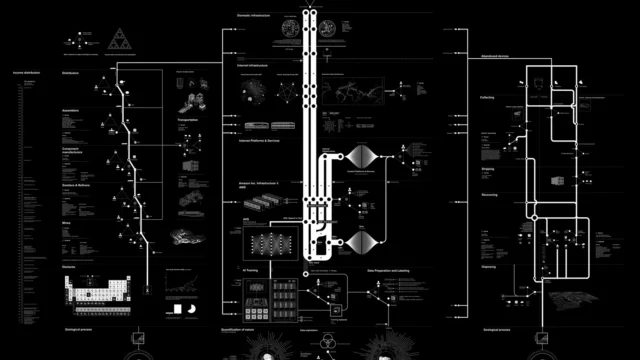
Anatomy of an AI System
Kate Crawford and Vladan Joler
-

Sculpturing a Peace Monument
Total Refusal
-
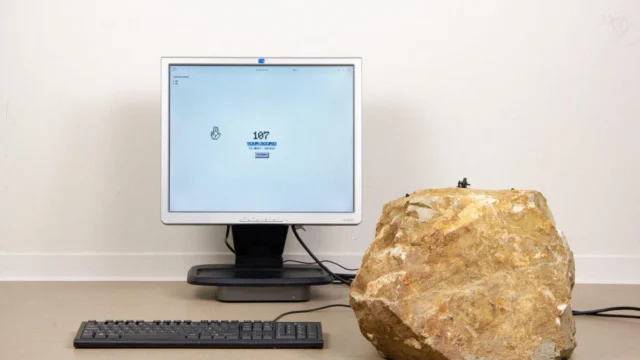
Mouse
Volkan Dinçer
-
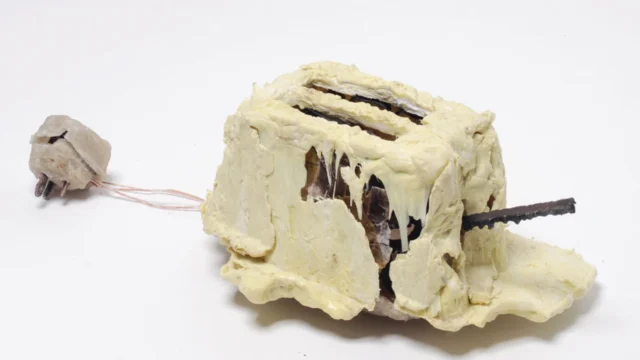
Toaster Project
Thomas Thwaites
-
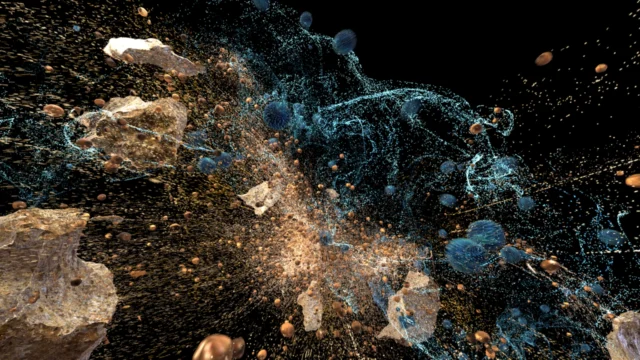
[Alien] Star Dust – Meditations
Victoria Vesna
-

Myconomy: A concept of circular economy based on ‘Ganoderma lucidum’
JKU, Soft Matter Physics (SoMaP) Division
-
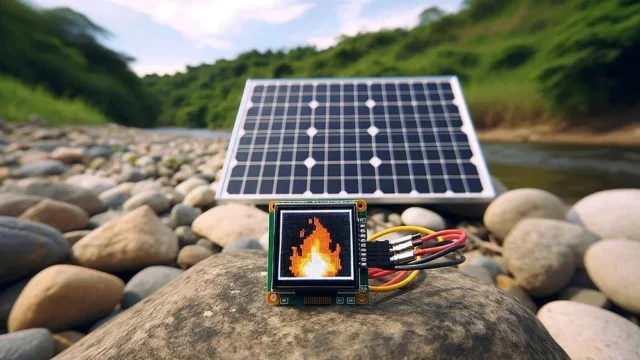
Ecology of Fire
Volkan Dinçer